Aerobic Septic System Chlorination
By law, TCEQ requires a disinfection device on all septic systems using surface disposal. These devices include tablet and liquid chlorinators, ultraviolet light and ozone.r
Do's & Dont's
View our tips for keeping your aerobic septic system healthy.
tFAQ'S
Visit the FAQ's section, use tags to find what you're looking for fast. Tablet Chlorination
The most common disinfectant device found on aerobic septic systems is the Tablet Chlorinator. Depending on your household's water usage, you can expect to use one tablet ($2.00) per person each month.
Concentrations of chlorine residual are 1/10th milliliter per liter (.1ppb).
PRO TIPS
- Use only Septic Tablets, NO pool chlorine
- Never add more than 1 tablet per-person each month
- Septic Tablets vs. Bleach -
Chlorinator Comparision
Calculate how fast you'll start saving money after replacing your tablet chlorinator with a LQC with our all-new Chlorinator Calculator!
Plus, compare many more details with our "Pro's & Con's" side-by-side comparison.
Jump Down - Chlorinator Calculator Liquid Chlorination
Liquid Chlorinators (LQCs) dispense 6% household bleach either before, during, or immediately after spraying.
The concentration of chlorine residual varies with each type (between 2/10ths milliliter - 2 milliliters per liter)
PRO TIPS
- We recommend the EZ-Tank Brand.
- We can refill your LQC for you, just select the "LQC Add-on" when activating Auto-Tracts.
Septic Tablet Chlorinators
Texas A&M Agrilife has comprehensive information on the tablet chlorinator. Texas A&M Agrilife recommends the following:

- Inspect weekly to ensure tablets are present
- Homeowners are responsible for adding chlorine tablets
- Place 2-5 tablets in tube at a time
- Wash out blockage if necessary
- Use only calcium hypochlorite Don’t use swimming pool chlorine tablets because an explosion will occur. See more about EPA fine
- Do not combine wastewater and swimming pool tablets because the combination will form an explosive compound.
- Tablets are caustic and emit chlorine gas from container. Use gloves and well ventilated space when handling.
- Chlorine gas is poisonous and corrosive. Do not store chlorine tablets near gasoline because mixing vapors each container will spontaneously combust (start a fire without matches).
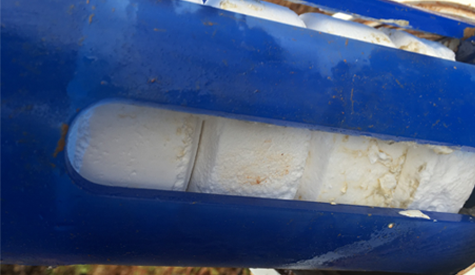
The Environmental Protection Agency (EPA) is a federal agency responsible for protecting the environment. If a homeowner uses swimming pool tablets in a wastewater system the first fine is $500 and subsequent fines are $2000. Aside from the explosive nature of swimming pool tablets, the EPA is concerned that their misapplication will result in “super bacteria” evolving in nature.
Sunlight breaks down the wastewater chlorine (calcium hypochlorite) residual in the soil and not swimming pool chlorine (trichloroisocyanuric acid). Pool chlorine is designed not to decompose in sunlight for obvious reasons.
However, if used for wastewater, the microbes in the soil will evolve and we can have super bacteria that can’t be killed effectively. This will adversely affect all drinking water and wastewater treatment for the entire country.
Septic Tablet Re-fill Service
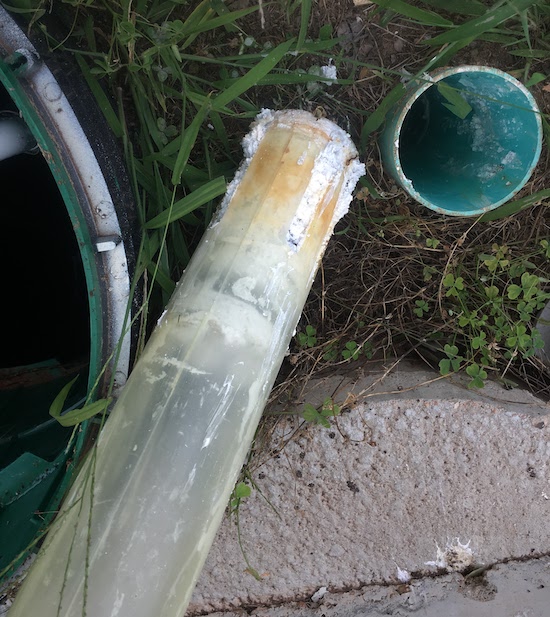 Advanced Aerobic Systems does NOT provide a refill service for chlorine tablets. There are two main reasons we believe it is unreasonable to provide such a service:
1. Wastewater Chlorine Tablets are hydroscpoic, abrobing moisture from the air. Because the environment inside your septic tank is humid, once you refill your tablet dispenser, the tablets will start to expand over the course of a month or two. This commonly leads to "Bridging" where the tablets expand so much, they stick to the sides of the dispenser tube, preventing them from dropping down and being dissolved.
In order to provide a substainal supply of chlorine, based on the recommended 2-5 tablets each month, we could need to add 15 tablets or more during each visit. Adding this many tablets would lead to bridging very quickly, rendering almost all tablets useless.
2. All chlorine tablets have a limited lifespan and degrade over time. By leaving all these tablets in the dispenser for months at a time, they become less potent, eventually leaving a tablet of filler material with much less chlorine substance inside, which can result in improper treatment of the wastewater spraying onto your lawn.
If your current maintenance provider has a tablet service its important that they show up every month and provide the service as prescribed by Texas A&M Agrilife.
Jump Back Up Septic Liquid Chlorinators
Liquid chlorinators (LQCs) dispense 6% house hold bleach (calcium hypochlorite) either before (simultaneous with effluent stream), during or immediately after pump out to the spray field. The concentration of chlorine residual varies with each type (.2ppb to 2.0ppb). A typical bleach 3-gallon dispenser will provide a 4 month supply. The most important factor in liquid chlorination is chlorine contact time with the microbes in the water. Systems that dispense bleach during the pump out have the least contact time. Dispensing bleach immediately after the pump out will provide diminishing contact until the next pump out. Dispensing bleach as the effluent is entering the pump tank will meter the bleach as needed and yield maximum contact time and the optimum chlorine residual.
Our Liquid Chlorinator (LQC) Recommendations:
We recommend 6-8% bleach over tablet chlorination for the following reasons:
- Easier to find
- Easier to use (lasts up to 4 months)
- Safer (see above)
- 2 to 20 times the chlorine residual (kills more bacteria)
- Less expensive over time. (depends on the number of people in home). Typically pays for itself in 2 years. Tablet chlorinators have lower initial cost but cost more over time.
- We recommend the LBC Manufacturing EZ-Tank Liquid Chlorinator
- We do not recommend ozone or ultraviolet light because they are too expensive
Chlorine service
Advanced Aerobic Systems provides a liquid chlorine refill service with each of the three annual inspections (1@ 4 months). When signing up online, just select "LQC Refill Service" to add this service to your contract!
Gravity Flow - EZ-Tank

The main component is a vacuum-sealed reservoir that fits securely inside the riser, resulting in a very clean installation.
A small pipe extends down into the effluent inside the tank. As more effluent flows in from your home, it raises the water level inside the small pipe. This pushes the air inside the pipe into a tube and up to the top of the reservoir, resulting in a small amount of bleach dripping down into the tank.
This very simple gravity flow design allows for installation without venturis or moving parts, leaving you with a reliable, long-lasting design for many years to come.
Visit Manufacturer's Site
Drop-Pressure Dosing - Clearstream
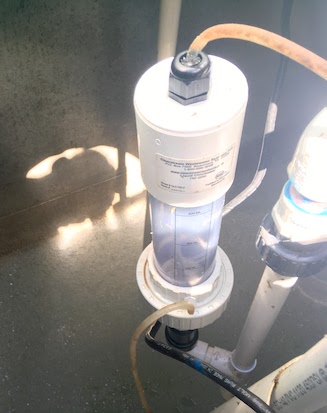 The internal component is a small chamber connected to the pressurized line to the spray field.
 Water pressure from the pump pushes a ball against an o-ring (which are positioned vertically), sealing off the small chamber above. The small tube from the reservoir is connected to the small chamber, and now with the bottom blocked off, the chamber begins to fill.
When the pump turns off, the pressure against the ball releases, allowing the ball to fall away from the o-ring. This allows the small amount of bleach to fall into the pump tank. There's also a secondary ball inside the chamber that falls into place to prevent bleach from constantly pouring in.
Visit Manufacturer's SiteVenturi - LBC-500
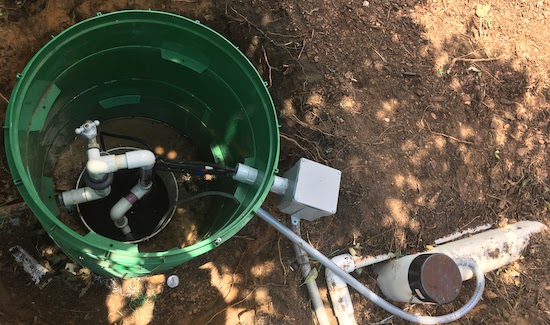 The internal component is a venturi device, which is connected to the line from the pump.
Water pressure from the pump flows through the venturi and pulls a vacuum on the small tube connected to the reservoir, thus pulling bleach along with it into the pump tank.
Visit Manufacturer's Site Jump Back Up Septic Chlorinators Comparison
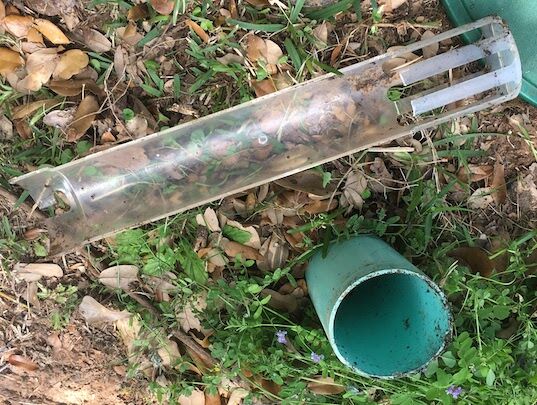
Tablet Chlorinators
PROS
- No up-front costs - Typically comes included with system.
- Can be cost-effective with few home occupants & low water usage.
CONS
- Unit must be manually cleaned out and re-filled every month .
- Can be difficult to find septic tablets depending on where you live.
- Tablets absorb moisture and can also release dangerous fumes if not stored properly.
- Septic Tablets are expensive. (the more water you use, the more tablets you buy).
- Maintenance Providers offer refill services that don't supply adequate chlorination .
DETAILS:
Tablet Chlorinators typically include a long narrow tube that holds tablets, acting as a dispenser, and a horizontal pipe that the tube rests in, letting the effluent flowing in the pipe pass across the tablets in the tube. As the bottom tablet is washed away, gravity pulls the next one down and so forth, until the tube is empty.
Because of this design, when re-filling the tube, only add the amount necessary for the month, as filling the tube completely with tablets will cause them to become stuck in the tube, preventing them from falling, and rendering the chlorination process inactive.
Jump Back Up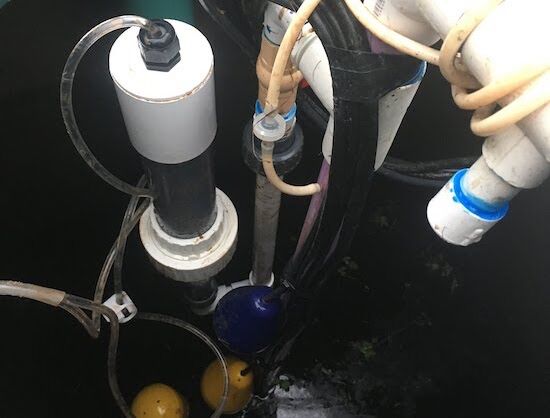
Liquid Chlorinators
PROS
- Treats wastewater up to 20 times better than septic tablets.
- LQCs can store over 3 months of bleach (depending on model and usage)
- Utilizes cheap household bleach, and is easily refillable.
- Re-fills can be done effectively by maintenance provider if you don't want to worry about it.
CONS
- Many aerobic septic systems don't come with a Liquid Chlorinator installed, so there's an upfront cost involved. - That being said, most people will save money in the long-run installing an LQC, thanks to much-cheaper refills.
DETAILS:
There are several different types of Liquid Chlorinators. Please see our Liquid Chlorinator (LQC) section above for some different models available.
Typically the liquid chlorine (household bleach) is held in an exterior reservoir, connected to an internal component via a small tube.
This internal component typically determines the type, function, and reliability of the chlorinator.

Phone: (281) 431-0123
Email: Support@AdvancedAerobic.Systems
Address: 2154 County Rd. 57 Rosharon, TX 77583
Maintenance Provider License #MP0001301 Installer License #OS0003120 hLegal Notice
All content provided by this website is protected under copyright by Advanced Aerobic Systems.Site design and customization by: